The Parent's Guide to Recognising Quality Personalised Education

The Parent's Guide to Recognising Quality Personalised Education
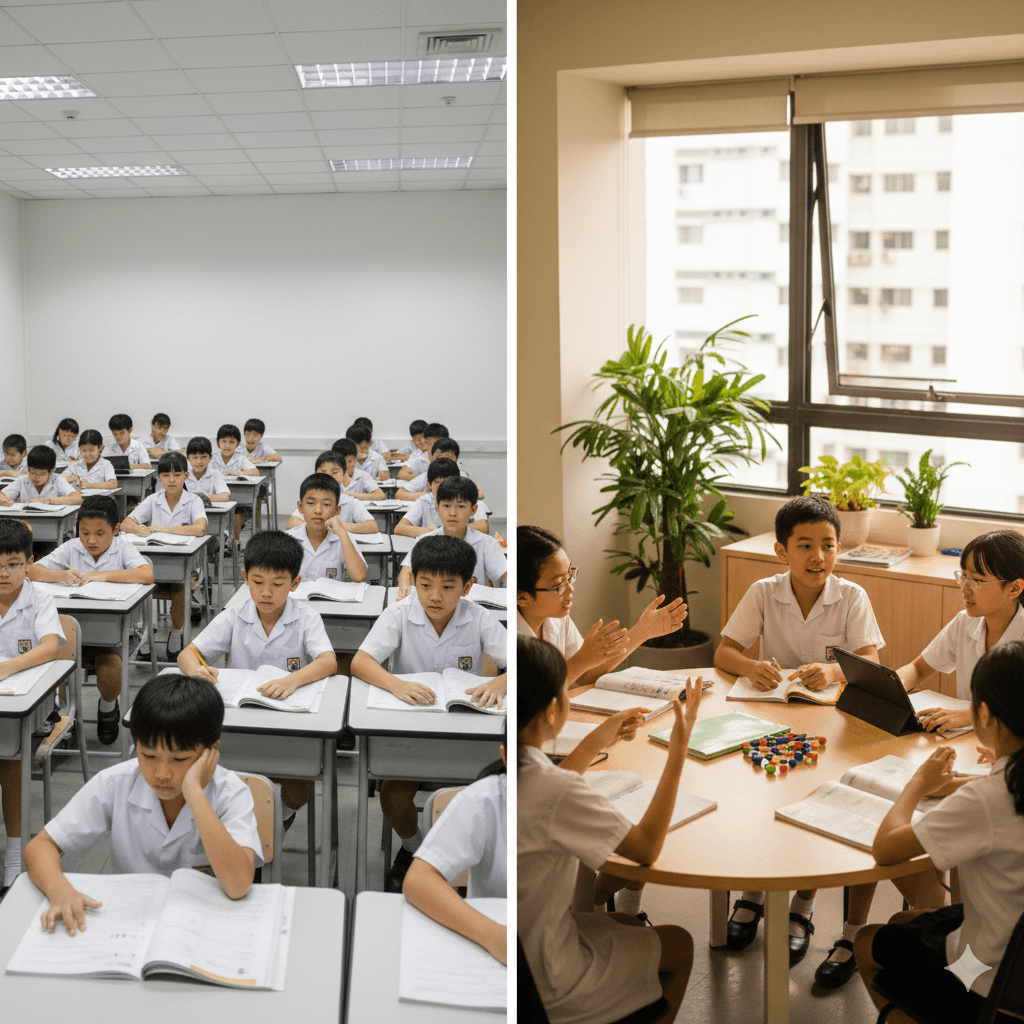
Every tuition center in Singapore claims to offer "personalised learning." It's on websites, in brochures, during center tours. But walk into most of these centers and you'll see the same thing: rows of students working through identical materials at the same pace, receiving the same instruction, completing the same assignments.
This isn't personalisation. It's marketing.
As a parent investing significant time and money in your child's education, you deserve to know: what does genuinely personalised tuition actually look like? How can you distinguish quality individualised learning from centers that simply use the language while delivering standardised instruction?
After years of working with students from various educational backgrounds at Our Learning Loft, we've identified clear indicators that distinguish authentic personalised education from its superficial imitations.
Red Flag #1: Class Sizes That Make Personalisation Mathematically Impossible

This is the first and most obvious indicator, yet parents often overlook it.
Simple question to ask: What are your typical class sizes?
If the answer is 15-20+ students, meaningful personalisation is impossible regardless of methodology or intentions. A teacher cannot know 20 students deeply enough to genuinely individualise instruction. They cannot observe each student's work closely enough to identify emerging misconceptions. They cannot provide sufficient one-on-one attention for differentiated support.
The mathematics is straightforward: in a 2-hour lesson with 20 students, even if zero time goes to instruction and the teacher somehow spoke individually with every student, that's 6 minutes per child. In reality, it's 1-2 minutes.
What quality looks like: Small class tuition with 6-8 students maximum. This creates time for genuine individual attention, enables teachers to observe each student's work process, and makes differentiated instruction practical rather than aspirational.
At Our Learning Loft, we cap classes at 8 students not as a premium pricing strategy but as a pedagogical necessity. Below this threshold, personalisation becomes possible. Above it, it becomes pretense.
Indicator #1: Teachers Know Students Deeply—And Can Prove It
Here's a revealing question to ask during center visits: "Can the teacher tell me specifically how my child learns best?"
In centers claiming personalisation without delivering it, answers will be vague: "All students benefit from our methods," or "We adapt to different learning styles." These non-answers reveal that teachers don't actually know individual students well enough to describe their specific learning patterns.
What genuine personalisation looks like:
After several weeks, a teacher in a quality tuition center can tell you specifics: "Your daughter processes mathematical concepts best when she can visualise them first—I use diagrams before introducing symbolic notation. She gains confidence from working through easier examples before tackling challenges, so I structure practice that way. She tends to rush through word problems without reading carefully, so I've been teaching her annotation strategies."
This level of knowledge only develops through consistent one-on-one interaction and close observation—requiring small group settings where teachers can actually pay attention to how individual students think and learn.
Indicator #2: Differentiated Materials and Activities
Observe a lesson at the tuition center. Are all students working through identical materials at the same pace? Or do you see evidence of differentiation?
Red flags for standardisation:
Everyone completes the same worksheet. The teacher explains one method and expects everyone to use it. Advanced students wait while struggling students receive help. Students who've mastered material practice it repeatedly while peers who need more support rush to keep up.
Evidence of genuine personalisation:
Students work on related but differentiated materials matching their current level. The teacher circulates, providing different levels of scaffolding to different students—some receive hints, others get direct instruction, advanced students tackle extension problems. Pacing varies based on individual mastery rather than calendar dates.
At Our Learning Loft, our small class tuition model makes this differentiation sustainable. With 6-8 students, teachers can manage multiple levels of material simultaneously. They can check each student's work individually and assign next steps based on current understanding rather than class averages.
Indicator #3: Assessment That Informs Instruction, Not Just Grades
How does the tuition center assess student understanding? If the answer is "regular tests" or "mock exams," that's assessment designed to produce data for parents, not to inform personalised instruction.
Questions to ask about assessment practices:
How frequently do teachers assess individual understanding? How do they use that information to adjust instruction? What happens when assessment reveals a student hasn't mastered material—do they move forward with the class anyway, or receive targeted support?
What quality personalised assessment looks like:
Ongoing formative assessment through observation, questioning, and reviewing student work. Teachers continually gather information about each student's understanding and immediately adjust instruction based on what they learn.
When a student demonstrates mastery, they advance to more challenging material. When gaps emerge, they receive targeted review before proceeding. Assessment isn't just about assigning grades—it's about understanding where each student is so instruction can meet them there.
In our personalised learning environment, this continuous assessment happens naturally because class sizes allow teachers to engage individually with each student multiple times per lesson.
Indicator #4: Students Can Articulate What They're Learning and Why
Here's a telling exercise: ask students at the tuition center what they're working on and why.
In centers offering surface-level personalisation:
"I'm doing Chapter 7 because that's what we're covering." "Practicing algebra because there's a test next week." Students understand tasks but not learning goals. They're completing assignments without metacognitive awareness of their development.
In quality tuition centers with genuine personalisation:
"I'm working on identifying assumptions in arguments because I tend to accept claims without questioning them." "Practicing this specific problem type because I make calculation errors when fractions are involved." Students understand not just what they're doing but why, and can connect activities to their specific learning needs.
This awareness develops when teachers discuss learning goals individually with students and help them understand their own progress—conversations that only happen in small group settings where there's time for genuine dialogue.
Indicator #5: Flexible Pacing Based on Mastery, Not Calendar
Does everyone in the class move to new topics at the same time regardless of individual mastery? Or does pacing respond to student needs?
Rigid pacing indicators:
"We cover Topic X in Week 3 for all students." Students who've mastered material continue practicing while peers catch up. Students who need more time move forward before achieving understanding to stay with the class.
Flexible, personalised pacing:
While there's overall curricular structure, individual students advance based on demonstrated mastery. If a student needs an extra week on a concept, they get it. If someone's ready to accelerate, enrichment materials challenge them appropriately.
Our 3E Framework explicitly supports this flexibility. The Educate pillar focuses on building genuine understanding rather than coverage, meaning students don't advance until foundations are solid. The Elicit pillar recognises each student's unique potential, which means honouring different developmental timelines.
Indicator #6: Regular Communication About Specific Progress
How does the tuition center communicate with parents about student progress? Generic report cards with letter grades tell you little about personalised attention.
Questions to ask:
How often will I hear about my child's progress? What level of detail will I receive? Will communication be standardised or specific to my child?
What genuine personalisation produces:
Regular, detailed updates about specific strengths, particular challenges, and individualised strategies being used. Not "doing well in math" but "has strong computational skills, working on word problem analysis—specifically practicing identifying relevant information."
Teachers in personalised settings can provide this specificity because they actually know each student's learning profile. In our small class tuition model, teachers maintain detailed understanding of each student's development and can communicate meaningfully with parents about specific progress.
Indicator #7: Alignment Between Philosophy and Practice
Visit the tuition center and observe lessons. Does what you see align with what they claim?
Philosophy-practice gaps to watch for:
Claims about "student-centered learning" but lessons consisting of teacher lecture with minimal student engagement. Promises of "critical thinking development" but activities focused entirely on procedure memorisation. Marketing emphasising "confidence building" while classroom culture penalises mistakes.
Authentic alignment:
Claimed values visibly shape actual instruction. If they emphasise critical thinking, you see students analysing, questioning, and defending reasoning. If they promise personalised support, you observe differentiated materials and individual coaching. If they highlight holistic development, instruction addresses more than just academic content.
At Our Learning Loft, our stated 3E Framework—Educate, Expose, Elicit—isn't aspirational. Visit our classes and you'll see:
Educate in action through instruction that prioritises understanding over memorisation
Expose through discussions connecting academic content to broader contexts
Elicit through questioning that draws out individual student thinking
Indicator #8: Teachers as Guides, Not Just Instructors
What role do teachers play in personalised learning environments versus traditional ones?
In standardised instruction:
Teachers deliver information, assign practice, and assess compliance. The relationship is transactional—teacher provides content, students complete work.
In genuinely personalised settings:
Teachers know students as individuals and mentor their development. They understand each student's goals, challenges, learning preferences, and growth areas. They adjust not just academic content but emotional support and motivational approaches based on individual needs.
This mentoring relationship requires the deep knowledge that only develops through consistent individual interaction over time—impossible in large classes, natural in small group tuition.
The Real Test: Student Outcomes Over Time
Ultimately, the proof of personalised education appears in student development over months.
Short-term grade improvements can happen through drill-and-practice without genuine personalisation. What distinguishes quality individualised learning is sustained growth across multiple dimensions:
Students become more independent learners, requiring less direct instruction over time. They develop metacognitive awareness of their own learning processes. Their conceptual understanding deepens beyond procedure execution. They build resilience and confidence from appropriately challenging work. They demonstrate improved critical thinking and problem-solving abilities.
These outcomes only result from education that truly responds to individual students' needs—what we call holistic education focused on developing the whole child.
Making an Informed Choice
Recognising quality personalised education requires looking past marketing claims to observable indicators:
Class sizes that make individual attention possible. Teachers who demonstrate deep knowledge of individual students. Evidence of differentiated instruction and materials. Assessment that informs teaching, not just grades. Students with metacognitive awareness of their learning. Flexible pacing based on mastery. Specific progress communication. Alignment between philosophy and practice.
When you find a tuition center demonstrating these indicators, you've found genuine personalisation—the kind that transforms learning outcomes and develops capabilities far beyond test performance.
At Our Learning Loft, we've organised every aspect of our model around creating these conditions: small class sizes, comprehensive teacher training, flexible structures, and the 3E Framework that ensures personalisation serves holistic development.
Your child deserves more than personalisation as marketing copy. They deserve the real thing—individualised instruction that sees them clearly, knows them deeply, and supports their unique learning journey.
That's what quality education looks like. That's what you should expect. And that's what you can find when you know what to look for.