Small Classes, Big Impact: The Personalization Advantage Parents Miss

Small Classes, Big Impact: The Personalization Advantage Parents Miss

When evaluating tuition centers in Singapore, parents naturally compare credentials, curricula, and exam track records. These factors matter. But there's one advantage that often gets overlooked—despite being the most powerful predictor of learning outcomes: genuine personalization.

Not "personalized" in the marketing sense, where every center claims to tailor instruction while teaching standardized content to classrooms of 20+ students. Real personalization—the kind that happens when teachers actually know each student's learning patterns, can identify emerging misconceptions immediately, and adjust instruction in real-time based on individual needs.

This level of personalization isn't just difficult in large group settings. It's mathematically impossible.

At Our Learning Loft, our commitment to small class tuition isn't a premium pricing strategy—it's the only way to deliver the individualized attention that transforms learning outcomes.

The Mathematics of Teacher Attention

Let's start with simple arithmetic that reveals why class size matters so fundamentally.

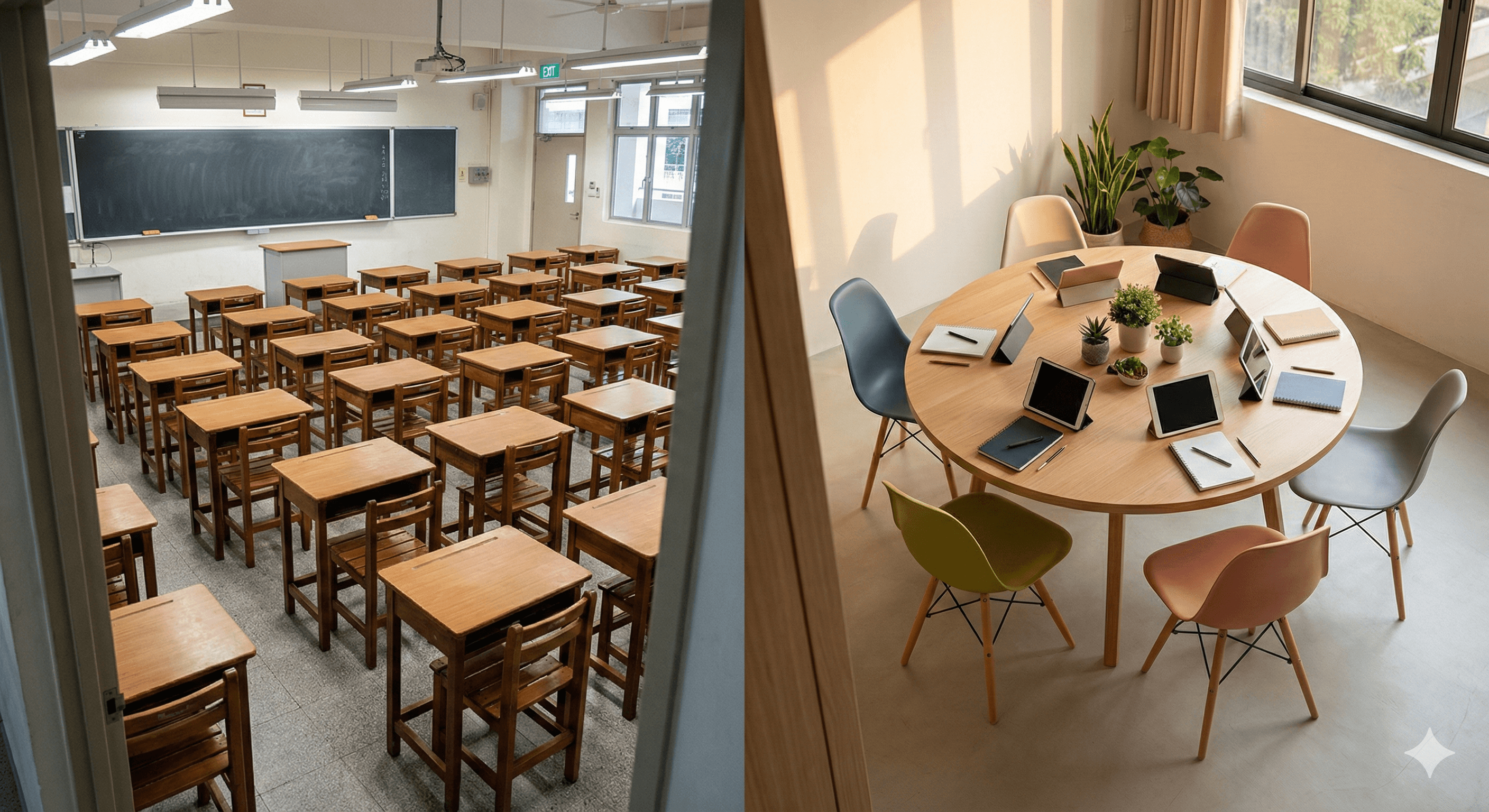
In a typical 2-hour lesson with 25 students, even if the teacher spent zero time on instruction and devoted every minute to individual students, each child would receive less than 5 minutes of personal attention. In reality, with necessary whole-class instruction, that drops to 1-2 minutes per student.

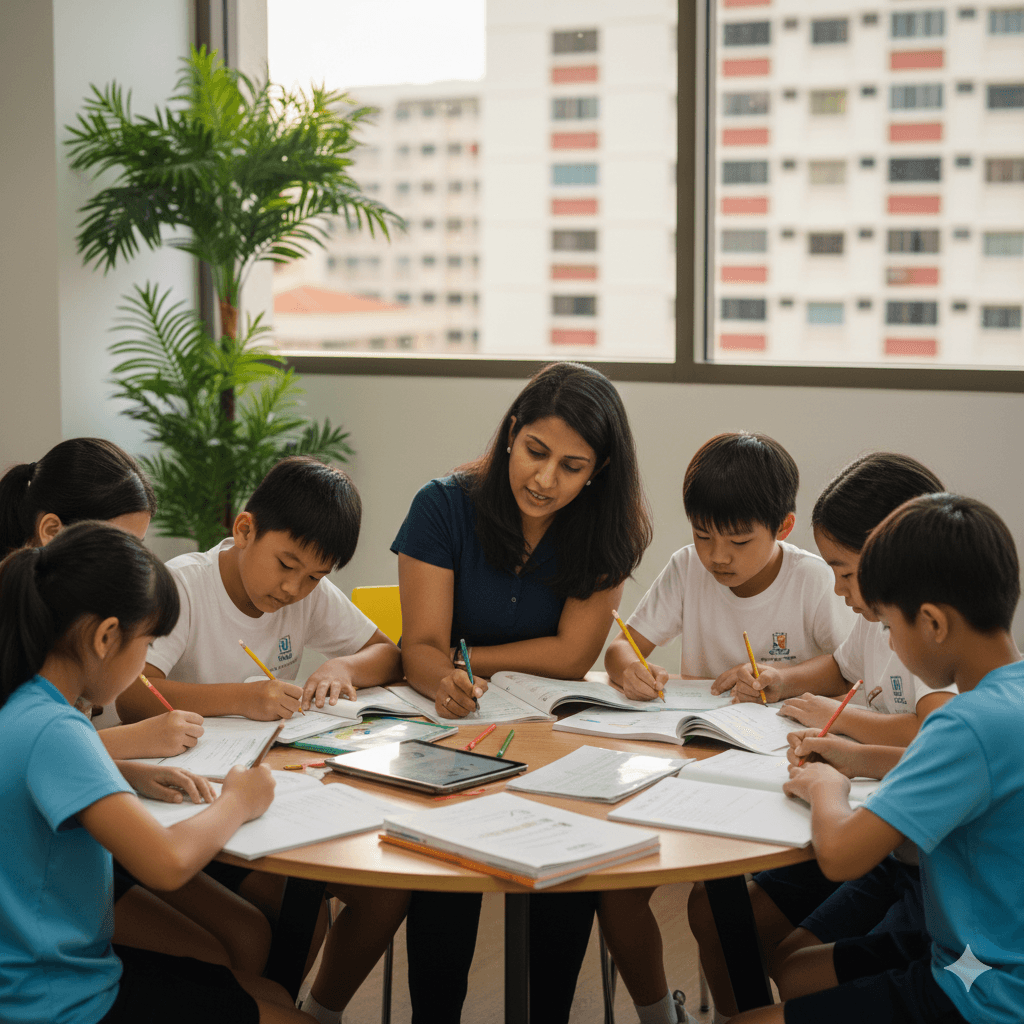
In our small group tuition model with 6-8 students, that same teacher can spend 15-20 minutes on individualized interaction per lesson—a 10x increase. This isn't marginal improvement. It's transformational.

But the advantage goes beyond minutes counted:

In small classes, the teacher can observe each student throughout the lesson, noticing who's engaged versus who's lost, who needs additional challenge versus who requires more foundational support. They're not managing classroom logistics and crowd control—they're actively teaching.

How Small Class Sizes Enable True Adaptive Teaching

Every experienced educator knows this truth: no two students learn the same way or at the same pace. Effective teaching requires constant adaptation based on student response.

In large group settings, this adaptation is minimal. Teachers present material one way and hope it lands for most students. Those who don't understand the initial explanation get left behind or need to seek help elsewhere.

In our personalized learning environment, adaptation happens continuously:

The teacher explains a mathematics concept using visual models. They notice one student's confused expression and immediately offer a numerical example instead. They see another student's "aha moment" and provide an extension problem to deepen that understanding. A third student connects the concept to something discussed weeks ago—the teacher reinforces that connection and builds on it.

This responsive teaching requires small groups where the teacher can actually see, hear, and respond to each individual. It's not an instructional luxury—it's how effective learning actually works.

Identifying Learning Gaps Before They Become Learning Crises

Here's a scenario that plays out constantly in large tuition centers: a student doesn't fully grasp a foundational concept in Week 2. They can complete basic practice questions through pattern recognition, so the gap goes unnoticed. By Week 6, when more complex material builds on that foundation, the student is completely lost—and neither they nor their teacher can identify why.

Small class tuition creates a completely different dynamic.

In our quality tuition center setting:

Teachers know each student's baseline understanding and learning patterns. When a student hesitates on a problem that should be straightforward given previous progress, the teacher notices immediately. They can probe understanding through targeted questions, identify the specific misconception, and address it before it compounds.

A Primary 5 student in our program struggled with word problems despite solid computational skills. In a large class, this might have been diagnosed as "poor reading comprehension" with generic advice to "practice more." Our teacher's one-on-one attention revealed the real issue: the student was trying to use every number in the problem rather than identifying relevant information. One focused conversation about problem analysis—possible only because of our small class size—changed everything. Word problems went from frustrating impossibilities to manageable challenges.

This is the power of teachers who actually know their students and can provide individualized learning support based on specific needs rather than general categories.

Creating Space for Different Learning Styles

Educational research has thoroughly debunked the myth of fixed "learning styles"—the idea that students are inherently visual or auditory learners. But what the research confirms is that students benefit from encountering information through multiple modalities and having the flexibility to engage with content in ways that make sense to them.

Large classes can't accommodate this reality. Time constraints and classroom management needs require standardized delivery methods.

Our small group learning approach makes multimodal teaching practical:

When introducing new vocabulary, our English teachers might simultaneously display words visually, discuss etymology and usage patterns, create physical movements or gestures to represent meanings, and have students use words in original sentences. Different students connect with different entry points, and in small classes, teachers can observe which approaches are landing with which students.

For students who struggle with abstract concepts, teachers have time to provide concrete examples and manipulatives. For those who grasp ideas quickly, teachers can move to abstract applications without making others feel rushed or confused.

This isn't about labeling students or limiting them to one approach—it's about recognizing that learning is personal and teaching should respond to the individual humans in the room.

The Relationship Foundation for Risk-Taking

Intellectual growth requires risk-taking: trying new strategies, asking potentially "stupid" questions, making mistakes visibly. But students only take these risks in psychologically safe environments.

Large classes inherently lack this safety. With dozens of peers watching, the fear of public failure or embarrassment keeps many students silent. They protect their self-image by never revealing what they don't understand.

Small class tuition changes this equation entirely:

In groups of 6-8, students develop genuine relationships with peers and teachers. They see everyone struggle with something and successfully push through to understanding. Mistakes become normal learning events rather than status threats.

A Secondary 1 student told us they finally felt comfortable asking questions at Our Learning Loft—after years of tuition elsewhere—because "Miss actually wants to hear what I'm thinking, not just the right answer." This student's academic improvement was dramatic, but the real victory was the willingness to engage openly with challenging material instead of hiding confusion.

This psychological safety is a direct function of class size. Teachers can't create deep, trusting relationships with 30 students. They can with 6.

Personalized Feedback That Actually Shapes Learning

Generic feedback—"Good job!" or "Try harder next time"—does little to advance learning. Effective feedback is specific, timely, and actionable: it identifies exactly what's strong, pinpoints precise areas for improvement, and suggests concrete next steps.

Providing this quality of feedback to large groups is logistically impossible. There simply aren't enough hours for teachers to give detailed, individualized feedback on every student's work.

Our small class sizes make comprehensive feedback sustainable:

Teachers review each student's written work thoroughly, noting patterns in thinking and recurring challenges. During lessons, they provide immediate verbal feedback on reasoning processes, not just answer correctness. They can follow up on previous feedback to ensure students actually understood and applied it.

A student working on composition writing receives feedback that goes beyond "develop your ideas more"—it's specific guidance like "Your opening paragraph introduces the topic well, but I'd like to see you unpack your second example with more sensory details. Remember how you described the hawker center in your last piece? That level of specificity would strengthen this argument."

This specificity accelerates improvement because students know exactly what to work on rather than guessing what "better" looks like.

The Compounding Effect of Consistent Personalization

Perhaps the most understated benefit of small class tuition is how advantages compound over time.

In large settings, students receive occasional personalized support when they're visibly struggling. In our model, they receive ongoing individualized attention every single lesson. These regular micro-adjustments to instruction, frequent targeted feedback, and continuous relationship-building create learning trajectories that diverge significantly over months.

The compounding looks like:

Week 1: Teacher identifies this student benefits from real-world examples before abstract rules
Week 4: Instruction naturally incorporates this approach, accelerating understanding
Week 8: Student's confidence grows from consistent success, increasing engagement
Week 12: Deeper engagement leads to asking better questions and making new connections
Week 20: What started as an instructional accommodation has developed into stronger critical thinking skills

This positive spiral only happens with consistent personalization—which only happens in small classes.

Beyond Academics: Personalized Character Development

Our 3E Framework—Educate, Expose, Elicit—recognizes that students are more than academic performers. They're developing humans who need support across multiple dimensions.

Small class tuition makes it possible to know students as whole people. Teachers understand not just how they learn mathematics, but also their interests, worries, goals, and values. This knowledge allows for mentorship and character development that extends far beyond subject matter expertise.

When a student faces discouragement, the teacher can reference previous challenges they've overcome. When a student shows particular interest in a topic, the teacher can suggest enrichment resources tailored to that curiosity. When behavioral issues arise, the teacher can address them with understanding of context rather than generic discipline.

This holistic support system—possible only through the deep knowledge that comes from small classes—helps develop resilient, self-aware, motivated learners.

Making the Right Choice for Your Child

Class size seems like a simple number, but it determines nearly everything about the learning experience: how much individual attention your child receives, whether their specific needs get identified and addressed, how safe they feel taking intellectual risks, and whether their teacher truly knows them.

At Our Learning Loft, we've organized our entire model around keeping classes small because we've seen what this enables: genuine personalization, adaptive teaching, meaningful relationships, and consistent individualized support.

The question isn't whether small classes make a difference. The research and our students' outcomes make that clear. The question is whether your child currently has access to this advantage—and if not, what that's costing their learning journey.

Your child deserves to be known, seen, and supported as an individual. That's what quality education looks like. And that's what small class tuition delivers.